Nvidia’s $500B AI Compute Push Is the Bull Case for Decentralized Networks
The hyperscalers just admitted they can’t build fast enough. That’s the signal.
On August 10–11, Nvidia signed memorandums of understanding with Apollo, BlackRock, Blackstone, Brookfield, Goldman Sachs, and KKR to mobilize over $500 billion in third-party capital for AI compute infrastructure cnbc.comcoindesk.comnvidianews.nvidia.com. It’s the largest coordinated capital injection into GPU data centers in history.
And it’s still not going to be enough.
Because on August 4, Volta Infra—a Dell- and Nvidia-backed venture—signed a $10 billion, six-year compute deal with Anthropic coinmarketcap.com. That single contract consumes a meaningful chunk of the newly announced capacity before it even exists.
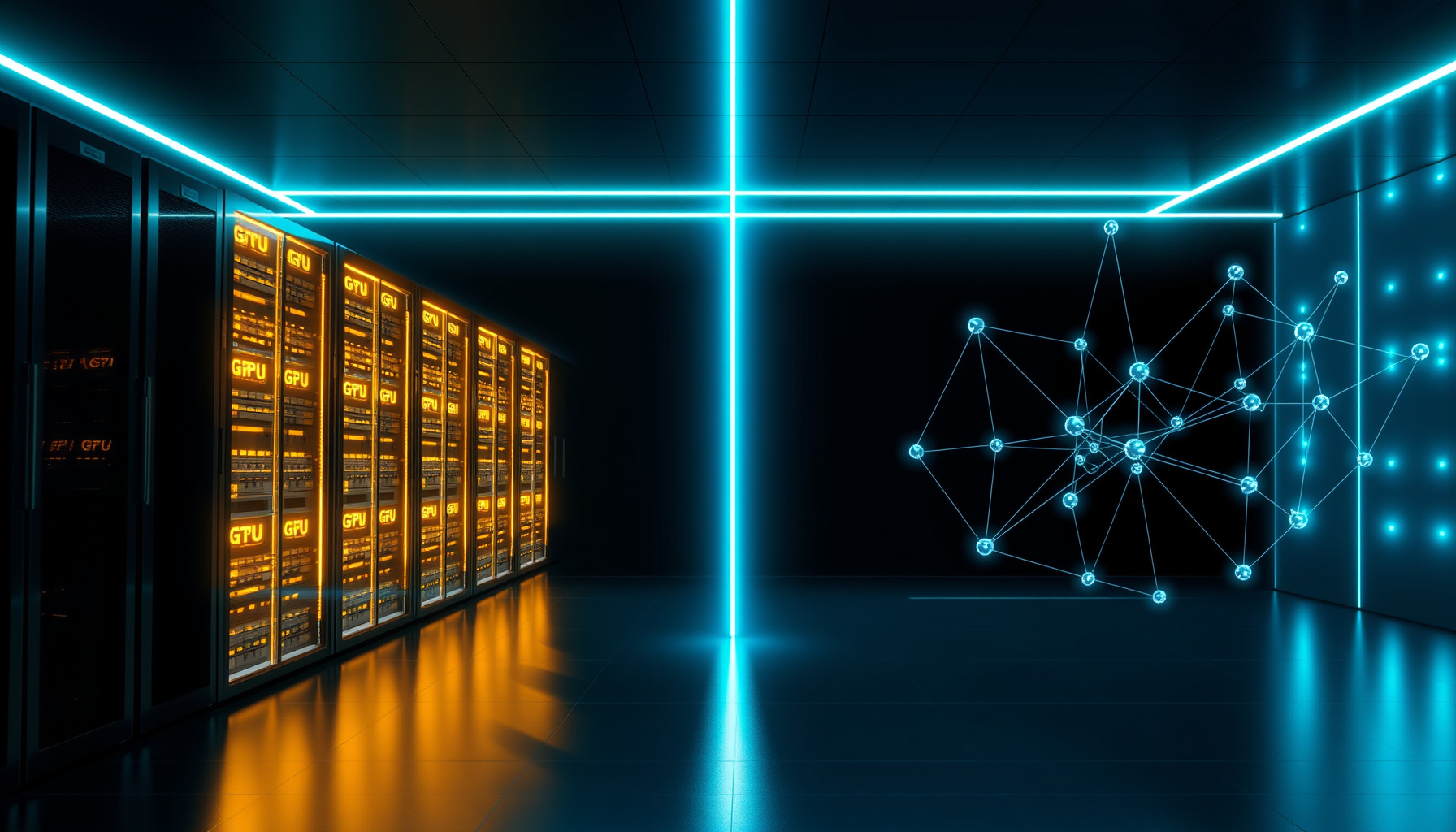
Here’s the uncomfortable truth: centralized compute is structurally bottlenecked. Not by capital, not by chip supply, but by the time-to-deploy of physical infrastructure. Every hyperscaler is fighting the same war—against lead times, against power constraints, against the physical laws of building a data center.
That’s why the most interesting AI infrastructure play of 2026 isn’t in Silicon Valley. It’s on decentralized networks that can spin up compute in minutes, not months.
The centralized bottleneck is real — and getting worse
Let’s do the math on why $500B won’t solve the problem cnbc.com.
Nvidia’s MOUs are designed to accelerate the build-out of AI factories. Apollo, BlackRock, and KKR aren’t writing checks for fun—they’re betting on a decade-long demand curve for GPU cycles. But even with unlimited capital, you can’t compress the supply chain for:
- Power infrastructure: substations, grid interconnects, and cooling systems take 24–36 months to permit and construct datacenterdynamics.com. Industry analysis confirms hyperscale build cycles are lengthening, not shortening.
- High-bandwidth interconnects: NVLink and InfiniBand fabric require bespoke cabling and switch topology that can’t be mass-produced on demand nvidia.com.
- Facility commissioning: chip-level testing and validation add weeks per cluster, with deployment complexity scaling non-linearly with cluster size docs.nvidia.com.
Meanwhile, demand is exploding faster than any physical build-out can match. Anthropic’s deal with Volta Infra is a harbinger: frontier labs are locking up compute years in advance, effectively hoarding capacity. If you’re a mid-sized AI company or an independent researcher, you’re already priced out of the queue.
This is the classic centralized failure mode: a single point of control creates artificial scarcity. The capital is there, but the infrastructure can’t scale elastically.
Decentralized networks: the overflow valve for GPU demand
Enter decentralized compute networks—Bittensor (TAO), Akash, and io.net. These aren’t speculative DeFi projects anymore. They’re becoming the overflow valve for a compute market that hyperscalers can’t serve in real-time.
Bittensor’s subnets are shipping real workloads
Bittensor has evolved from a vague “machine learning marketplace” into a structured subnet ecosystem. Two recent developments stand out:
-
Quasar (Subnet 24): Claims a 99.5% cost reduction versus centralized pre-training coinbird.com. Even if you discount that number by half, the implication is staggering—decentralized training is no longer theoretical. It’s competitive on cost, and it’s getting closer on quality.
-
OpenRoboto (Subnet 80): Launched August 10 for decentralized robotics AI coinmarketcap.com. This is significant because robotics AI requires edge inference—low-latency, geographically distributed compute. That’s a workload centralized clouds are structurally bad at. A decentralized network of heterogeneous GPUs is actually a better fit.
On August 10, TAO reclaimed the $202.50 resistance level, trading near $203.65 on 50% above-average volume coinmarketcap.com. The market is starting to price in real usage.
io.net’s token burn is a revenue signal, not a meme
io.net recently shifted to revenue-based token burns, burning 1.2 million IO from over $26 million in network earnings coinmarketcap.com. This is a critical signal for practitioners: the network is generating actual revenue from compute sales, not just token emissions.
Here’s why this matters: token burns tied to revenue create a deflationary pressure that aligns with network usage, not speculation. When a decentralized compute network burns tokens because people are paying for GPUs, that’s the closest thing to a “cash flow” narrative in crypto.
Akash: the quiet workhorse
Akash remains the most battle-tested decentralized compute network, with a mature marketplace for both GPU and CPU workloads akash.network. It doesn’t have the flashiest token narrative, but it has the longest track record of actually serving production workloads, including ML inference and fine-tuning jobs that require high availability.
The missing layer: agentic payments
Compute is only half the story. The other half is payments—specifically, the ability for AI agents to pay for compute, data, and services autonomously, without human intervention.
This is where the decentralized stack gets its real moat.
Circle Agent Stack: Circle is building a framework for USDC nanopayments—micro-transactions that AI agents can execute in real-time. The ARC token presale raised $222 million at a $3 billion valuation cryptobriefing.com. This is not vaporware; it’s a payments rail designed for machine-to-machine commerce.
Visa’s live tests: On July 2, 2026, Visa and several European banks ran live AI-agent transactions blockchain.news. This is the first institutional validation that agentic payments are not just a crypto fantasy—traditional financial infrastructure is actively building for it.
Why does this matter for decentralized compute?
Because the bottleneck for AI agents isn’t just GPU availability—it’s the ability to pay for GPU cycles in real-time, at granular levels. A centralized cloud requires a credit card, a corporate account, and a human to approve a purchase order. That’s a 24-hour lag. An agent operating on a decentralized network can spin up compute, run a task, and pay in USDC nanopayments within seconds.
The combination of decentralized compute (Bittensor, io.net, Akash) + agentic payments (Circle, Visa) creates a flywheel:
- Agents need compute → they find it on a decentralized marketplace
- They pay via USDC nanopayments → the compute network earns revenue → tokens burn → value accrues
- More agents join → more compute demand → more revenue → more burns
This is the bull case that Nvidia’s $500B push inadvertently validates cnbc.com. The hyperscalers are building centralized infrastructure for human-directed workloads. Decentralized networks are building elastic infrastructure for autonomous workloads. These are different markets, and the second one is growing faster.
What practitioners should watch
If you’re building AI infrastructure or deploying models, here’s your actionable checklist:
-
Watch Bittensor subnet-level revenue. TAO’s price action is nice, but the real signal is whether subnets like Quasar and OpenRoboto are generating consistent compute demand. If subnet revenue grows quarter-over-quarter, the network effect is real.
-
Track io.net’s burn rate vs. emissions. A network that burns more than it emits is effectively returning capital to holders. That’s a fundamental shift from “speculative token” to “productive asset.”
-
Test Akash for overflow workloads. If you’re hitting cloud GPU limits, run a pilot on Akash for non-critical inference jobs. The cost savings are immediate, and the reliability has improved dramatically over the past year akash.network.
-
Build with Circle Agent Stack now. The nanopayment rail is live. If you’re building agents that need to pay for compute, data, or APIs, integrating USDC payments today gives you a first-mover advantage cryptobriefing.com.
-
Monitor Visa’s agentic payment results. If Visa’s live tests scale, expect a wave of institutional capital into agentic infrastructure—including decentralized compute blockchain.news.
The bottom line
Nvidia’s $500B capital push is not the death knell for decentralized compute cnbc.com. It’s the proof that demand is outpacing centralized supply. The hyperscalers are building for the human-driven future. Decentralized networks are building for the agent-driven future.
The smartest practitioners will hold both portfolios.
cnbc.com: https://www.cnbc.com/2026/08/10/nvidia-wall-street-asset-managers-500-billion-ai-push.html coindesk.com: https://www.coindesk.com/tech/2026/08/11/nvidia-wants-to-turn-its-ai-chips-into-an-investable-asset-class nvidianews.nvidia.com: https://nvidianews.nvidia.com/news/nvidia-partners-with-apollo-blackrock-blackstone-brookfield-goldman-sachs-and-kkr-to-establish-ai-compute-infrastructure-financing-platforms-to-mobilize-over-500-billion-of-third-party-capital coinmarketcap.com: https://coinmarketcap.com/cmc-ai/io-net/latest-updates/ datacenterdynamics.com: https://www.datacenterdynamics.com/en/analysis/data-center-construction-timelines-are-getting-longer/ nvidia.com: https://www.nvidia.com/en-us/networking/infiniband/ docs.nvidia.com: https://docs.nvidia.com/datacenter/ coinbird.com: https://www.coinbird.com/cryptocurrencies/bittensor/news coinmarketcap.com: https://coinmarketcap.com/cmc-ai/bittensor/latest-updates/ coinmarketcap.com: https://coinmarketcap.com/cmc-ai/io-net/latest-updates/ akash.network: https://akash.network/ cryptobriefing.com: https://cryptobriefing.com/circle-agent-stack-usdc-ai-agents/ blockchain.news: https://blockchain.news/news/rise-of-agentic-commerce-ai-transactions
📖 Related Reads
- ToolBrain — tool reviews, LLM comparisons, and AI workflow guides
Cross-links automatically generated from NiteAgent.
← Back to all posts