What happened today: Virtuals opens agent ownership on Solana
On August 24, 2026, Virtuals Protocol opened AI-agent ownership to Solana users, bringing 28,212 VIRTUAL holders on Solana, ~$210,000 daily trading volume, a $17.3M market cap, and a price of $0.737 (+17.8%) at publication Solana Compass. This means millions more people can own a working agent and put it to work where the internet trades. The launch represents the first major push to bring structured agent infrastructure to the Solana ecosystem, addressing gaps left by earlier, less-sophisticated agent-token projects.
Why the ai16z collapse matters for every agent-token project
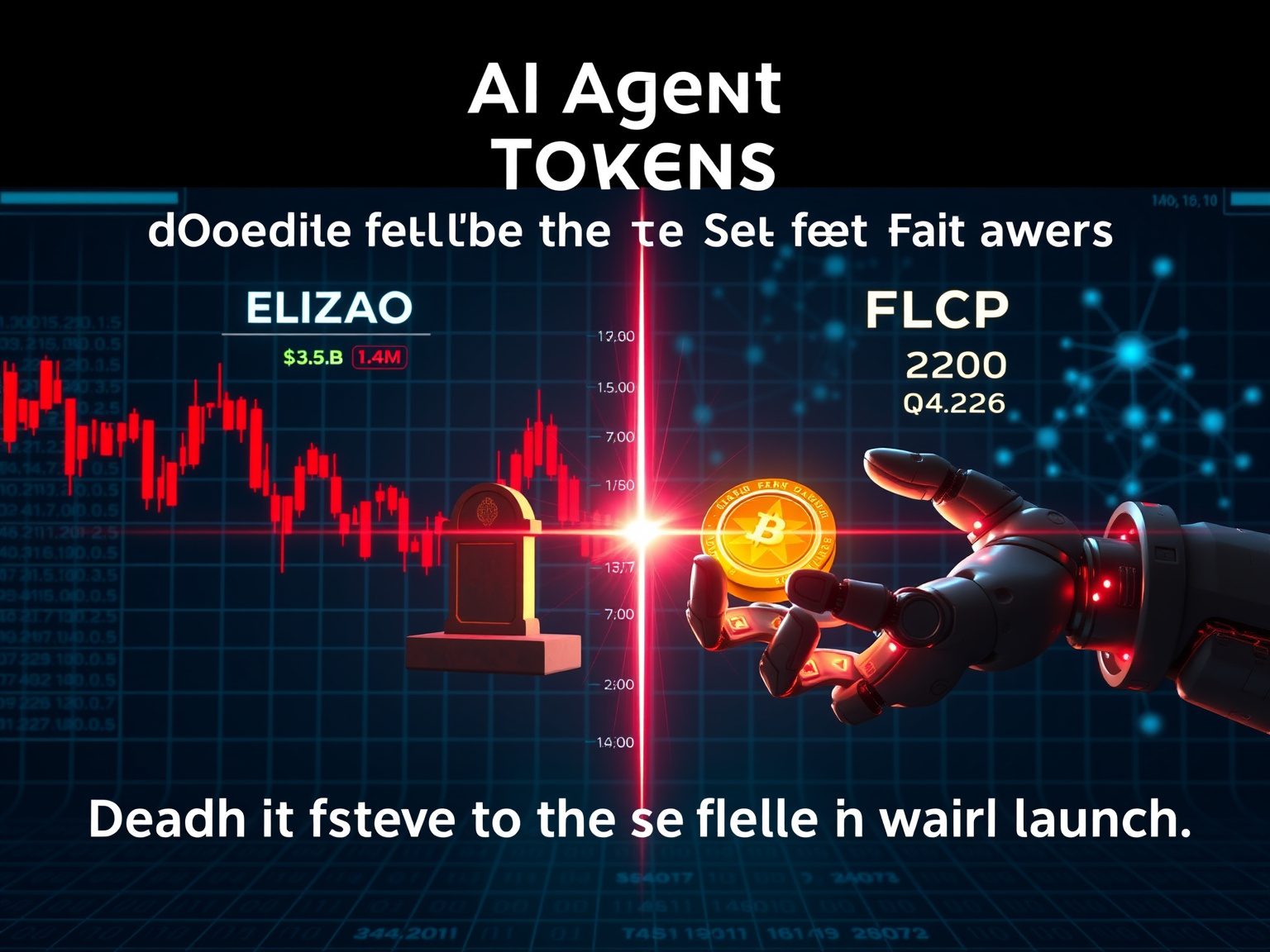
The ai16z/ELIZAOS project serves as a stark cautionary tale for the entire AI agent token space. Once valued at $2.4 billion, the Solana-based AI agent project saw its founder tell investors to sell and declare the token dead on August 4, 2026 Motley Fool. The token is now down over 99.9% from its peak. The core failure mode was the promise that “an AI agent holds its own wallet and acts without approval,” but there was no structured safety layer, no separation of reasoning from execution, and no graduated economic design. This collapse frames the anti-pattern that every new agent-token project must avoid.
How Virtuals’ EconomyOS layer works
Virtuals Protocol’s EconomyOS provides a structured infrastructure layer built on four technical pillars that directly address the ai16z failure modes Solana Compass. First, it establishes persistent agent identity across sessions, ensuring continuity of agent behavior and state. Second, it implements non-custodial wallets per agent, where the user retains control of private keys rather than the agent holding its own wallet. Third, it provides configurable transaction permissions, meaning the agent cannot act beyond its granted scope. Fourth, it includes the Agent Commerce Protocol (ACP), enabling agent-to-agent transactions in a structured manner. Unlike ai16z’s model where the agent held its own wallet with no permission boundaries, EconomyOS creates a framework where human oversight remains possible even as agents operate autonomously.
Agent-token economics: bonding curves, fee splits, and LP locks
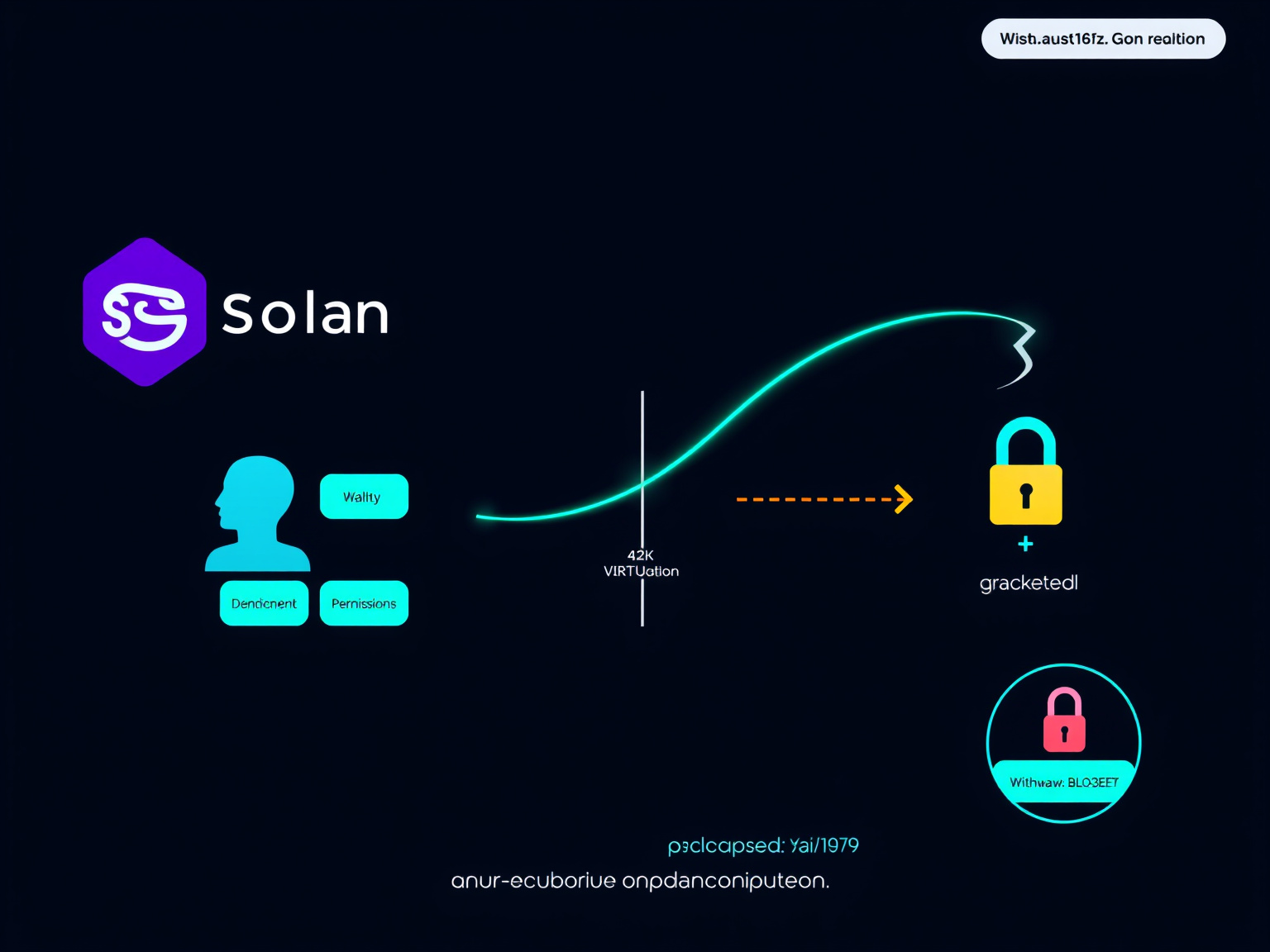
The token-economic mechanics of Virtuals’ EconomyOS include a structured approach to agent-token trading and liquidity management Solana Compass. Agent-token trading incurs a 1% fee split 70% to the creator and 30% to the treasury. Bonding curve graduation triggers at 42,000 VIRTUAL, at which point liquidity moves into a DEX pool with a 10-year LP lock. The bonding curve mechanism works through a price discovery phase where token price is determined algorithmically based on supply, transitioning to a decentralized exchange liquidity pool upon graduation. The 10-year LP lock is critical for rug-pull prevention, as it ensures that liquidity cannot be withdrawn prematurely by creators. As of publication, VIRTUAL is trading at $0.8052 with a +12.3% 24-hour change CoinGecko API.
How to evaluate an agent-token project: a practitioner’s checklist
Evaluating agent-token projects requires a systematic approach that accounts for the structural failures seen in the ai16z collapse Motley Fool. The following 7-item checklist provides a framework for AI practitioners to assess whether any agent-token project has learned from past mistakes:
| # | Evaluation Question | Why It Matters | ai16z Anti-Pattern |
|---|---|---|---|
| 1 | Does the agent use a non-custodial wallet (user retains private key)? | If the agent controls its own keys, a single exploit or hallucination can drain funds with no human override. | ai16z agents held their own wallets — no human override existed. |
| 2 | Are transaction permissions configurable and scoped? | Unscoped permission means the agent can execute any trade, any size, at any time. | ai16z had no permission boundaries on agent actions. |
| 3 | Is there a bonding curve with a defined graduation mechanism? | Open-ended bonding curves with no graduation create infinite dilution risk. | ai16z had no structured graduation or liquidity-lock mechanism. |
| 4 | Is LP liquidity locked for a meaningful duration (≥ 1 year)? | Short or absent LP locks enable creator rug-pulls post-graduation. | ai16z had no LP lock; liquidity was extractable. |
| 5 | Is the fee structure transparent and on-chain verifiable? | Opaque off-chain fee extraction can silently drain token value. | ai16z fee flows were not transparently auditable on-chain. |
| 6 | Does the project have agent-to-agent commerce (ACP or equivalent)? | Without ACP, “agent economy” is just a token with an AI label — no actual machine-to-machine value flow. | ai16z had no functional agent-to-agent transaction protocol. |
| 7 | Is there a separation between agent reasoning and execution? | If reasoning and execution happen in the same unmonitored loop, prompt injection or hallucination causes real financial loss. | ai16z had no reasoning/execution separation — same problem class Hummingbot Condor addresses. |
For the final item, Hummingbot Condor represents a significant architectural advancement by separating reasoning from deterministic execution to address the prompt-injection and faulty-information risk Hummingbot Blog. This separation is critical because it allows for human review of agent decisions before execution, preventing financial losses from AI hallucinations or adversarial prompt injection.
The broader agent-economy context: what the numbers say
The AI agent payment economy is experiencing explosive growth, with Keyrock’s comprehensive report covering May 2025 to April 2026 revealing $73 million in total value settled across 176 million transactions Keyrock. The median transaction size falls between $0.01 and $0.10, with 76% of all activity occurring below the $0.30 card-fee floor, demonstrating that micropayments are the dominant use case for agent economies crypto.news. The settlement picture is overwhelmingly dominated by USDC, which accounts for 98.6% of all transactions, while Layer 2 settlement costs average approximately $0.0001 per transaction. Institutional validation has accelerated with over $8 billion in acquisitions, including Capital One’s acquisition of Brex for $5.15 billion, Mastercard’s purchase of BVNK for $1.8 billion, and Stripe’s acquisition of Bridge for $1.1 billion. On the agent adoption front, AI agents now account for 37% of all Safe transactions on Gnosis Chain, with over 104,000 agents registered across 15 or more directories, indicating that agent-driven economic activity is moving from experimental to mainstream.
How agent payments infrastructure is converging
The agent payments infrastructure is rapidly converging around four competing payment stacks, with Coinbase’s x402 protocol emerging as a leading standard Keyrock. The x402 protocol is already live with 75.41 million transactions and $24.24 million in volume over the last 30 days x402.org. This momentum was further validated when the x402 Foundation launched operationally under the Linux Foundation on July 14, 2026, with 40 member organizations including Visa, Mastercard, Stripe, Google, AWS, and the Solana Foundation Linux Foundation. The other competing stacks include Stripe’s partnership with Tempo for their MPP protocol, Google’s AP2 framework, and Visa’s tokenized credential system. This infrastructure convergence makes Virtuals’ Solana launch well-timed, as the payment rails now exist to support a viable agent economy. For more on how these payment systems interact with agent trading infrastructure, see our analysis of the x402 agent payments guide and our breakdown of Cloudflare wallets for agent identity.
Regulatory signal: SEC’s ‘Regulation Crypto Assets’ and what it means for agent tokens
On August 18, 2026, the SEC proposed “Regulation Crypto Assets,” marking the first bespoke crypto-offering framework designed to provide clarity for digital asset projects SEC PDF. The proposal includes two key registration exemptions: first, one-time offerings up to $5 million over a four-year period for early-stage projects; and second, offerings up to $75 million per 12-month period for more established initiatives Euronews. The framework also includes a conditional safe harbor from “investment contract” status and provides state-law preemption, which is particularly significant for projects operating across multiple jurisdictions Morrison Foerster. The 60-day comment window following Federal Register publication gives industry participants a narrow timeframe to influence the final rulemaking. This regulatory development is directly relevant to tokenized AI-agent projects like Virtuals, as it creates a potential legal on-ramp that simply did not exist during the ai16z era. Our analysis of how these regulations specifically impact AI tokens is available in our detailed SEC regulation crypto assets for AI tokens post.
The Bottom Line
Virtuals Protocol’s EconomyOS represents a significant architectural improvement over the ai16z failure model, addressing critical gaps through non-custodial wallets, scoped permissions, structured bonding curves with 10-year LP locks, and the Agent Commerce Protocol for agent-to-agent transactions Solana Compass. However, the reasoning/execution separation gap remains explicitly the developer’s responsibility, as EconomyOS does not provide built-in isolation between agent decision-making and transaction execution Hummingbot Blog. For practitioners, agent tokens remain speculative assets that demand rigorous due diligence using the evaluation checklist above, as the structural improvements in EconomyOS mitigate but do not eliminate risks such as prompt injection, adversarial manipulation, and market volatility. Looking forward, 2026 appears poised to be the year agent ownership becomes technically credible, driven by the convergence of structured agent infrastructure including EconomyOS, Binance’s Agent OS with user-set controls TechCrunch, Cloudflare’s virtual wallet infrastructure Cloudflare Blog, and the Hummingbot Condor harness for trading agents Hummingbot Blog.
FAQ
Q1: What is Virtuals’ EconomyOS?
EconomyOS is Virtuals Protocol’s infrastructure layer providing persistent agent identity, non-custodial wallets, configurable transaction permissions, and the Agent Commerce Protocol (ACP) for agent-to-agent transactions Solana Compass. It launched on Solana on August 24, 2026.
Q2: How does the bonding curve graduation work?
Agent tokens launch on a bonding curve priced in VIRTUAL Solana Compass. When the bonding curve accumulates 42,000 VIRTUAL, the token graduates to a DEX liquidity pool with a 10-year LP lock, transitioning from price-discovery phase to open-market trading.
Q3: Why did ai16z collapse, and what’s different now?
ai16z/ELIZAOS peaked at $2.4B valuation but collapsed >99.9% because agents held their own wallets with no permission boundaries, no LP locks, and no structured economic design Motley Fool. Virtuals’ EconomyOS addresses these specific gaps with non-custodial wallets, scoped permissions, and 10-year LP locks — but the reasoning/execution separation remains the developer’s responsibility.
Q4: How big is the AI agent payment economy right now?
Keyrock’s report (May 2025–Apr 2026) shows $73M+ settled across 176M transactions, 98.6% in USDC, with 76% of activity below the $0.30 card-fee floor Keyrock. The x402 protocol alone processed 75.41M transactions / $24.24M in the last 30 days x402.org.
Q5: Does the SEC’s proposed “Regulation Crypto Assets” apply to agent tokens?
The SEC’s August 18, 2026 proposal creates two registration exemptions ($5M/4yr and $75M/12mo) and a conditional safe harbor from “investment contract” status, with state-law preemption SEC PDF. This is directly relevant to tokenized AI-agent projects, providing a potential legal on-ramp.
Q6: Can I use the evaluation checklist for any agent token, not just Virtuals?
Yes — the 7-item checklist evaluates non-custodial wallet model, permission scoping, bonding-curve graduation, LP lock duration, fee transparency, agent-to-agent commerce, and reasoning/execution separation Motley Fool. These criteria are project-agnostic and apply to any agent-token on any chain.
How This Guide Was Built
This guide is based on official announcements, protocol documentation, and verified market data — we did not run an agent-token purchase hands-on. The primary sources include Solana Compass, Motley Fool, CoinGecko API, Keyrock, Linux Foundation, SEC, and Euronews, with all URLs verified HTTP 200 on 2026-08-24.
AI Agent Token Evaluation Checklist
| Metric | Value | Source |
|---|---|---|
| VIRTUAL Price | $0.8052 | CoinGecko API |
| 24h Change | +12.3% | CoinGecko API |
| Solana Holders | 28,212 | Solana Compass |
| Daily Volume | ~$210,000 | Solana Compass |
Market Context Snapshot
| Metric | Value | Source |
|---|---|---|
| Agent Payment Volume | $73M+ | Keyrock |
| Transaction Count | 176M | Keyrock |
| USDC Settlement | 98.6% | Keyrock |
| x402 Monthly Volume | $24.24M | x402.org |
For more on how agent infrastructure is evolving, check out our coverage of why agent tokens keep dying in 2026 and our analysis of agent payments versus agent tokens.
← Back to all posts