The Router Layer: Semantic & Cost-Aware LLM Routing in Production
The Problem: Why Per-Request Model Selection Is a Critical Production Lever
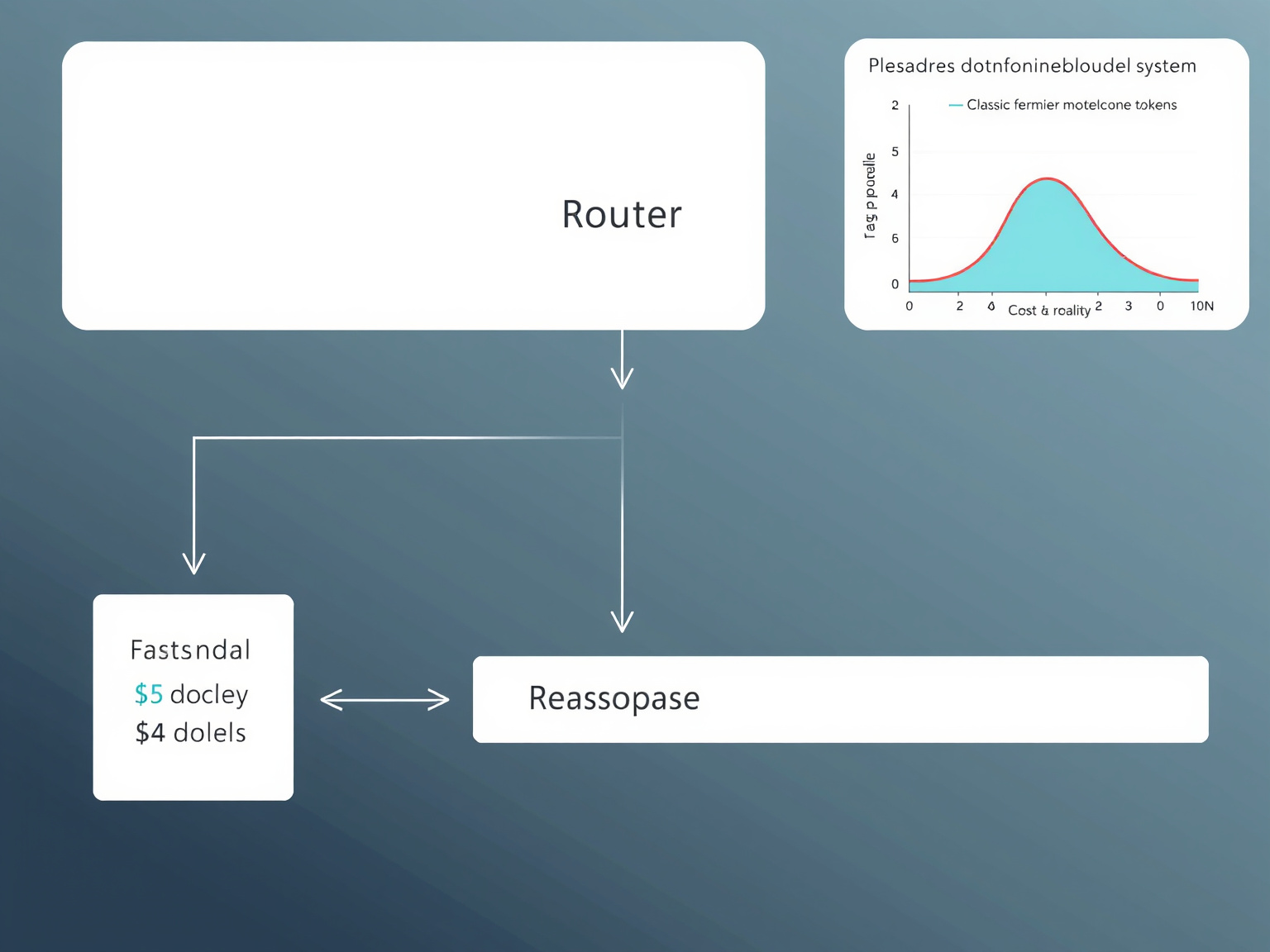
LLM routing—the layer that decides which model handles each incoming request—is now a critical production lever because most traffic is routine and can be served by cheaper models, while complex queries require expensive reasoning models. The rise of reasoning models with costly “thinking tokens” has made this routing decision a much bigger cost lever than it was in the GPT-4 era, as noted by IBM Research. Effective routing can dramatically reduce costs without sacrificing quality for the majority of requests.
A Taxonomy of Routing Approaches: From Rules to Learned Classifiers
The taxonomy of routing approaches spans rule-based heuristics, embedding similarity, learned classifiers, LLM cascades, nonpredictive audition, and provider/gateway routing. This classification, synthesized from sources like IBM Research and the RouteLLM paper, provides a map of the landscape for choosing a strategy. The goal is to match the request’s complexity to the most cost-effective model capable of handling it.
| Approach | How It Decides | Latency Overhead | Cost | Example Implementation | Best For |
|---|---|---|---|---|---|
| Rule-based/Heuristic | Simple metadata rules (e.g., prompt length) | Low | Minimal | Custom scripts | Simple, predictable traffic |
| Semantic/Embedding | Vector similarity to predefined routes | Milliseconds | Low | semantic-router | Fast intent classification |
| Learned Classifier | Predicts best model from preference data | Medium | Training cost | RouteLLM | Nuanced cost-quality trade-offs |
| Cascade | Runs cheap model first, escalates if needed | Variable | Low | FrugalGPT | High accuracy with savings |
| Nonpredictive Audition | Runs multiple models, picks best output | High | High | Custom parallel calls | Maximum quality control |
| Provider/Gateway | Routes by cost, latency, or uptime | Low | Platform fee | OpenRouter, LiteLLM | Multi-provider failover |
Cascades merit a specific callout: the FrugalGPT paper showed that a cheap-model-first pipeline with escalation can match GPT-4 quality with up to a 98% cost reduction, making it one of the strongest documented baselines for the cost-quality trade-off.
Deep Dive: RouteLLM’s Learned Routing from Preference Data
RouteLLM formalizes learned routing by training classifiers on human preference data from Chatbot Arena, offering four router types. As reported by the LMSYS blog, its matrix-factorization router achieved 95% of GPT-4 Turbo’s performance while using only 26% GPT-4 calls, and with LLM-judge-augmented training data, this dropped to just 14% of calls. This approach cuts costs by >85% on MT Bench, 45% on MMLU, and 35% on GSM8K while maintaining high performance.
The routers also generalized to an unseen model pair (Claude 3 Opus + Llama 3 8B) without retraining, demonstrating robust transferability. For a deeper look at cost optimization patterns, see our AI agent cost optimization guide.
Deep Dive: semantic-router’s Embedding-Based Millisecond Decisions
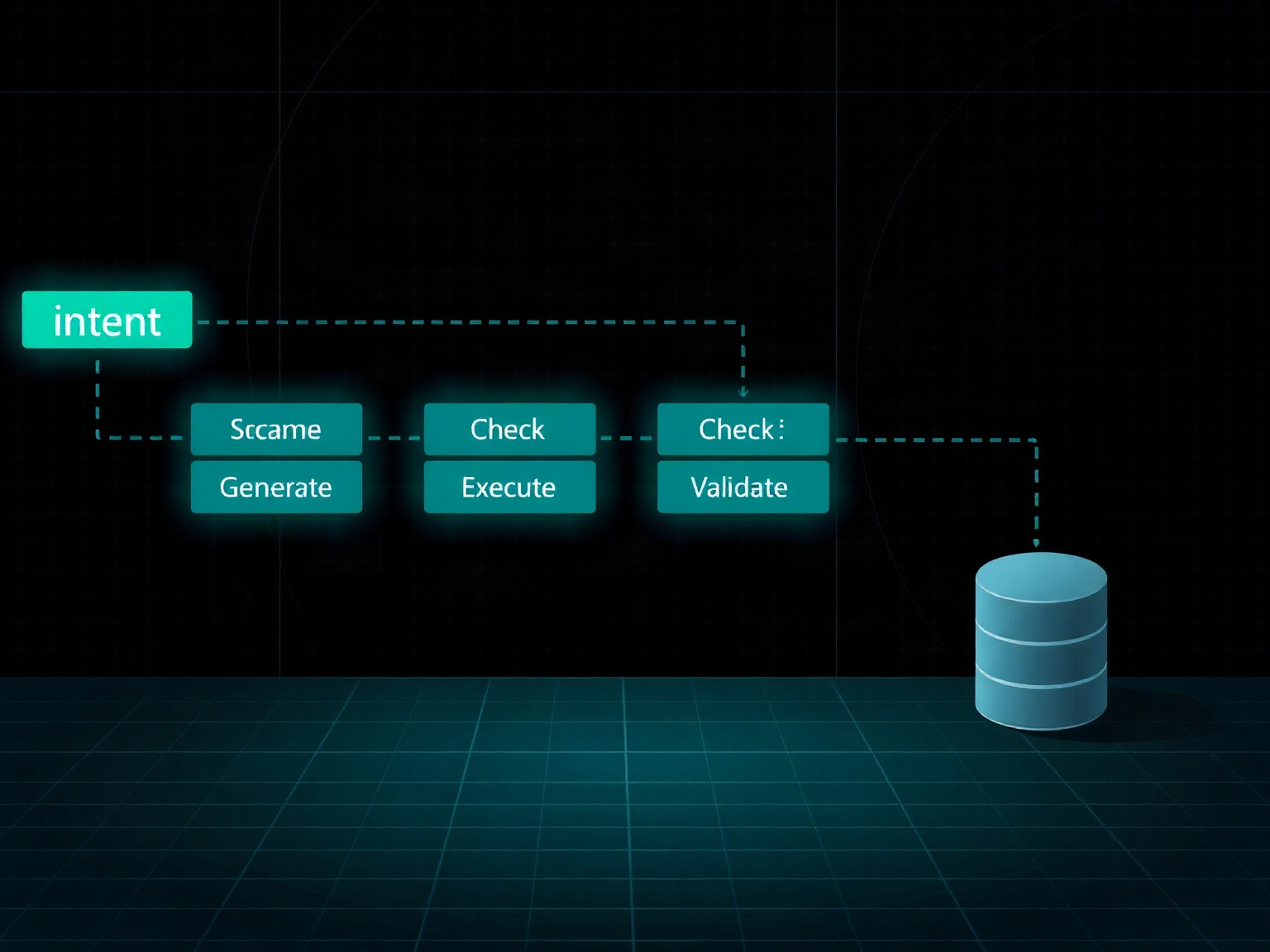
semantic-router makes routing decisions in milliseconds using only embeddings, without an LLM call, by classifying requests into predefined Route objects based on semantic similarity to example utterances. As detailed in its GitHub repository, it supports pluggable encoders, including local models via HuggingFaceEncoder, and offers a HybridRouteLayer for combining semantic and other routing logic.
This speed makes it ideal for fast, deterministic routing based on request intent, such as tool selection or safety classification. It operates as a “superfast decision-making layer” in the Aurelio AI Semantic Router documentation.
Routing Inside the Stack: vLLM, GPT-5, and OpenRouter Auto
Routing is now embedded within serving stacks and frontier products: vLLM’s Semantic Router uses a ModernBERT classifier to route simple queries to a fast path and complex ones to a Chain-of-Thought path. As documented by the vLLM blog, its project-reported trials show ~10% higher accuracy, ~50% lower latency, and ~50% fewer tokens. GPT-5 ships a built-in router, and OpenRouter’s openrouter/auto (powered by NotDiamond) automatically selects a model per prompt, as per OpenRouter docs.
These integrated routers represent a shift from external services to core architectural components, optimizing at the point of inference.
Fallback Chains & Operational Routing
Fallback chains and operational patterns are the boring-but-essential layer for production reliability. The LiteLLM Router implements routing strategies (cost-based, latency-based, least-busy) plus retries, cooldowns, and fallback chains across providers. Similarly, OpenRouter’s provider routing allows routing by cost, performance, or reliability preferences with automatic failover and variants like :nitro and :floor.
A critical operational metric is router latency overhead. As highlighted by RouterArena, a router adding 100ms+ per request can erase its cost savings. For insights on self-hosting gateways, refer to our build self-hosted AI gateway guide.
How to Evaluate Routing Quality: Benchmarks and Negative Results
Evaluating routing quality requires metrics like deferral curves, routing optimality, robustness to perturbation, and router latency overhead. Unified benchmarks like RouterArena (~8,000 queries, 44 categories) and LLMRouterBench (400K+ instances, 33 models) reveal sobering findings. LLMRouterBench found several recent methods—including the commercial OpenRouter routing—fail to reliably beat a Best-Single-Model baseline under unified evaluation, and embedding choice barely matters.
This underscores that router performance is highly benchmark-dependent. Results shift with the evaluation distribution, meaning a router that excels on one benchmark may fail on another. Before layering a router on top, it helps to measure the raw capability gap between candidate models in our model comparison arena.
When NOT to Route: The Case for a Single Model
You should not route when your traffic is homogeneous, when the cost/quality trade-off of a single model is acceptable, or when the added complexity and latency of a router outweigh potential savings. The LLMRouterBench paper finding that many routers fail to beat a Best-Single-Model baseline under unified evaluation is a critical caution.
If all queries require similar capability, a single model may be optimal. If a single model meets your cost and quality targets, routing adds unnecessary complexity. Always benchmark against a simple baseline first.
Practitioner Decision Checklist for Implementing LLM Routing
A practitioner’s decision checklist for implementing LLM routing involves: analyzing your traffic mix, selecting a routing strategy, instrumenting to measure baseline performance, implementing a router, and continuously measuring against the baseline. This framework helps separate hype from practical value.
- Analyze Traffic Mix: Categorize requests by complexity, required capability, and latency tolerance.
- Pick Strategy: Choose from the taxonomy (rule-based, semantic, learned, cascade) based on your analysis and resources.
- Instrument Baseline: Measure cost, quality, and latency of your current single-model setup.
- Implement & Measure: Deploy the router and compare key metrics against your baseline.
- Revisit: Continuously monitor as traffic patterns and model offerings change.
For a broader context on evaluation, see our MCP server performance benchmarking guide.
Decision Checklist: Key Tooling Options
The key tooling options for LLM routing range from learned classifiers and embedding-based routers to in-serving classifiers and operational gateways, each with documented, source-attributed performance numbers. The table below condenses decision mechanisms and headline results from the LMSYS blog and OpenRouter docs for side-by-side comparison.
| Tool | Type | Decision Mechanism | Key Numbers (Source-Attributed) | When to Use |
|---|---|---|---|---|
| RouteLLM | Learned classifier | Preference data from Chatbot Arena | >85% cost reduction on MT Bench at 95% GPT-4 performance (LMSYS blog) | Maximize cost-quality trade-off with training data |
| semantic-router | Embedding-based | Vector similarity to routes | Decisions in milliseconds, no LLM call (GitHub) | Fast, intent-based routing without inference cost |
| vLLM Semantic Router | In-serving classifier | ModernBERT model | Project-reported: ~10% higher accuracy, ~50% lower latency, ~50% fewer tokens (vLLM blog) | Optimize at the inference layer for speed |
| OpenRouter Auto | Multi-provider | NotDiamond-powered selection | Automatically picks best model per prompt (OpenRouter docs) | Access to a wide model zoo with automatic selection |
| LiteLLM Router | Operational | Cost-based, latency-based, least-busy | Includes retries, cooldowns, fallbacks (LiteLLM docs) | Manage multi-provider operations and failover |
The Bottom Line
LLM routing is a powerful but conditional technique. The most robust approach is to start with a single strong model baseline, thoroughly analyze your traffic mix, and only then evaluate a router if significant segmentation exists. Prioritize measured results over vendor claims, using router-specific benchmarks like RouterArena and LLMRouterBench as a reality check. The value of a router is not in its existence, but in its measurable improvement over the simple, correct baseline for your specific production traffic.
Frequently Asked Questions About LLM Routing
How much cost savings can I realistically expect from LLM routing? Realistic cost savings are benchmark-dependent and vary by traffic mix. RouteLLM’s learned routers achieved >85% cost reduction on MT Bench while maintaining 95% of GPT-4 performance (LMSYS blog), but LLMRouterBench shows many methods fail to beat a Best-Single-Model baseline under unified evaluation. Your results depend on how well the router aligns with your traffic.
Should I use RouteLLM or semantic-router? Choose based on your need for speed vs. learned nuance. semantic-router makes decisions in milliseconds using embeddings alone, ideal for fast, intent-based routing (GitHub). RouteLLM uses learned classifiers trained on preference data for more nuanced cost-quality trade-offs (RouteLLM paper).
What is the biggest pitfall when evaluating routers? The biggest pitfall is assuming benchmark results will transfer directly to your production traffic. Both RouterArena and LLMRouterBench show performance is highly sensitive to the evaluation distribution. A router that excels on one benchmark may fail on another, and many fail to beat a simple baseline.
How do I handle router failures or poor routing decisions? Implement fallback chains and operational routing patterns. Tools like the LiteLLM Router provide retries, cooldowns, and fallback strategies. OpenRouter offers provider-level routing with automatic failover (OpenRouter provider docs). The key is a safe default path.
Is routing inside the model (like GPT-5) better than an external router? Not necessarily. While GPT-5’s built-in router is accurate, RouterArena found it too costly to top the cost-quality leaderboard. External routers like RouteLLM or semantic-router offer more control and transparency over the routing decision for your specific trade-offs.
What metrics should I track to know if my router is working? Track the cost-quality frontier (cost vs. quality), routing optimality (closeness to the theoretical best), robustness (stability across query types), and router latency overhead. A router that adds significant latency can erase its cost savings, a first-class metric in RouterArena.
How This Guide Was Built
This review is based on official documentation, papers, benchmarks, and community reports — we did not run the tools hands-on. All claims are attributed to their respective sources, including primary research like the RouteLLM paper and RouterArena, official project documentation like semantic-router and vLLM, and community benchmarks like LLMRouterBench.
← Back to all posts