Inside NiteAgent: Architecture of a Self-Improving AI Agent Pipeline
Most AI content sites are a CMS with a prompt pasted into it. NiteAgent is the opposite: the site you see at niteagent.com is the front door of a closed-loop agent system — research in, published posts out, and a measurement layer that feeds every lesson back into the next cycle. This post walks the full architecture: the static-site front end, the verified asset pipeline, the multi-agent content pipeline, the quality ratchet, and the model-vs-model arena that ships winning designs straight to production.
The Bottom Line
- The site is the demo; the pipeline is the product. NiteAgent’s live archive lists 200+ posts on AI agents and agentic workflows, and the architecture that matters is the loop underneath: consume, generate, publish, measure, learn, repeat.
- The stack is deliberately boring where it counts: Astro content collections rendered to static HTML and served from Cloudflare Pages, with images stored in Cloudflare R2. No application servers, no database to patch, no CMS to secure.
- Quality is enforced by a ratchet, not a review queue. Every post must clear automated gates — sourced statistics, citation density, minimum length, verified image URLs — and the blog’s aggregate score can never drop below its floor.
- Design decisions are made by competition. The arena pits models against each other building real Astro components against the design system; the judge’s winner ships live.
- Every layer is a transferable pattern. Even if you never run an agent pipeline, the verified-asset, ratchet, and content-as-data patterns apply to any production content system.
What NiteAgent Actually Is
NiteAgent is the flagship blog of a broader “blog empire”: a set of niche sites (AI agents, coding intelligence, tools, and more) operated by an autonomous multi-agent system. The public product is niteagent.com — long-form architecture deep dives, production guides, and tutorials aimed at people building real agent systems.
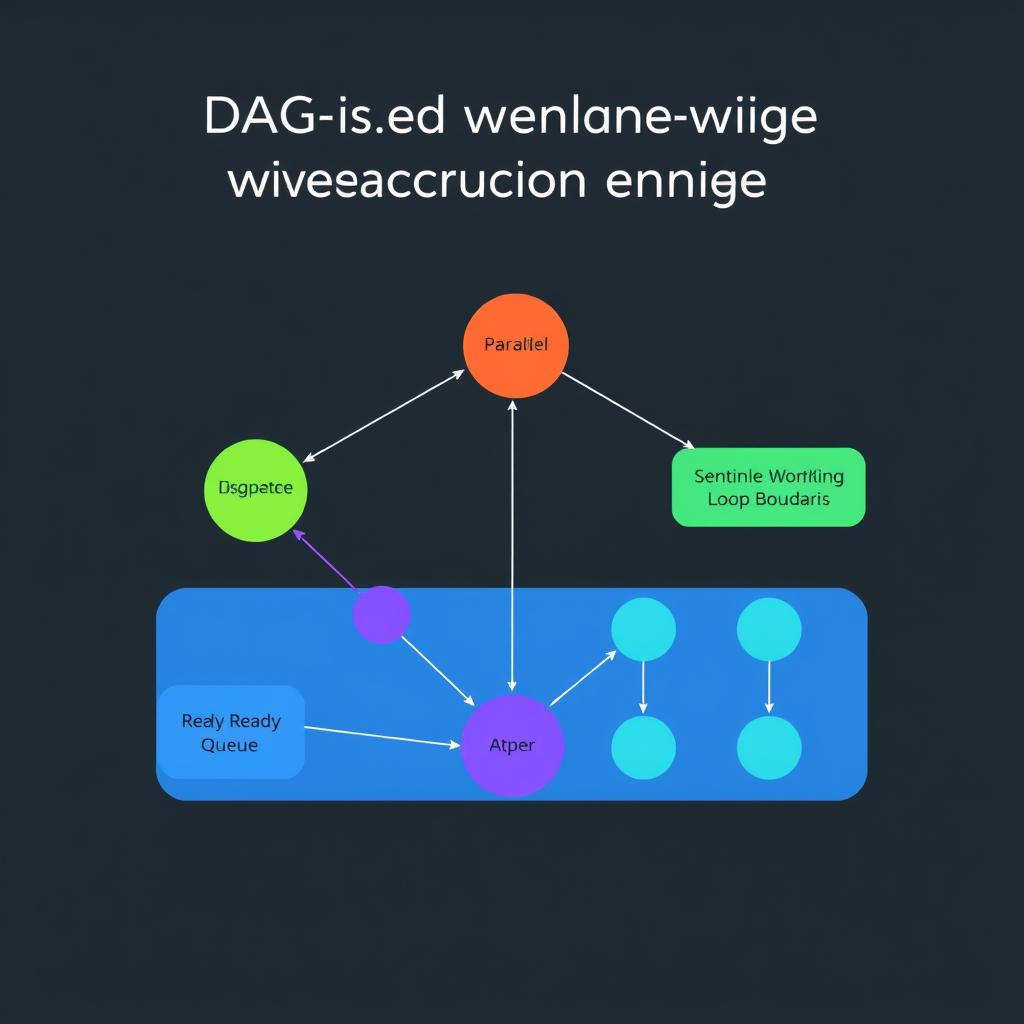
Underneath the marketing layer, the architecture is a five-stage loop:
Consumption → Generation → Publishing → Measurement → Learning
     ↑                                                    │
└────────────────────────────────────────────────────┘- Consumption: a weekly research sweep pulls from GitHub, HN, Reddit, web, X, and ProductHunt, detects cross-source patterns, and writes candidate topics into a per-blog queue.
- Generation: topic briefs are turned into drafts by a multi-model pipeline with distinct roles (research, build, judge), routed across providers.
- Publishing: drafts become markdown files in a git repository; a deploy script builds and ships them to Cloudflare Pages.
- Measurement: a quality ratchet scores every post against citation, length, and image gates, and event hooks verify the live URL after each deploy.
- Learning: weekly reviews log what worked, what failed, and what to change — the accumulated learnings feed the next cycle’s generation phase.
The operations layer is exposed to agents as MCP servers: blog stats, quality summaries, and topic queues are all reachable over the Model Context Protocol rather than through bespoke scripts. That single decision — standardize agent-to-tool access on MCP — is what lets the same pipeline drive multiple blogs without per-blog glue code.
Layer 1: The Front Door — Static Site on the Edge
The user-facing layer is an Astro 7 static site, chosen because Astro ships zero JavaScript by default and compiles content collections into plain HTML (Astro’s docs). The project uses Astro content collections to treat every post as a typed data record: markdown files in src/content/blog/ with frontmatter fields for title, description, publish date, hero image URL, tags, and category. The build compiles those files into HTML pages, an RSS feed, and a sitemap.
Three front-end decisions are worth copying:
- No third-party font CDN. The site bundles Atkinson Hyperlegible as local WOFF files, wired through Astro’s font configuration. Zero external font requests means no render-blocking third-party dependency and no privacy leak from a font host.
- A token-based design system. The palette — deep charcoal canvas, teal accent, layered surface tones — is defined once as CSS custom properties and referenced everywhere via
var(). Components never hardcode colors; they consume tokens. This is what makes the arena (Layer 5) possible: any model can produce a visually coherent component if the design tokens are the contract. - Search without a backend. Pagefind indexes the built output and provides full-text search as static assets — no search service, no API keys.
The whole site ships as static files to Cloudflare Pages, which means the CDN edge serves everything, TLS is managed by the platform, and there is no origin server to operate. For a content product, that is the entire infrastructure story: a git push becomes a production deploy.
Layer 2: The Verified Asset Pipeline
Every post requires a hero image, and the architecture treats images like code: generated, verified, stored in object storage, and referenced by URL from the same commit as the post.
The generation chain is FLUX.1-schnell with a fallback ladder: a primary free endpoint first, then the Hugging Face Gradio Space for the same model, then an OpenRouter FLUX.2 route. Each attempt uploads the result to a Cloudflare R2 public bucket and then runs two checks before the URL is accepted:
- HTTP 200 check: the uploaded object must be publicly fetchable.
- Color-diversity heuristic: the image must contain a minimum number of unique colors, which rejects the gradient-only “AI slop” images that text models tend to produce for abstract prompts.
Only after both checks pass does the R2 URL get written into the post’s frontmatter. The quality ratchet then re-checks the URL at review time, so a broken image blocks the deploy rather than shipping to production. The R2 bucket is the single source of truth for media — no binary assets in the git repo, no CDN-proxy fragility.
Layer 3: The Multi-Agent Content Pipeline
The generation layer is where the “agent” in the name lives. It is organized as a pipeline of specialized roles rather than one model doing everything:
| Role | Responsibility | Typical models |
|---|---|---|
| Research / PM | Topic sweeps, briefs, source selection | Frontier reasoning models |
| Builder | Draft the post from the brief | Fast, high-context models |
| QA / Judge | Score drafts, verify claims and citations | Strong reasoning models |
Routing is provider-agnostic: the same task can land on DeepSeek, Qwen, or Xiaomi MiMo depending on cost and availability. The arena page documents exactly this pattern in production — providers are listed with reliability percentages, and models are routed through a Nexum router with fallbacks.
The pipeline’s outputs are not just posts. Each cycle also produces intelligence (research findings saved for the next review chain) and self-improvement (notes on stale skills, broken APIs, and optimization opportunities). The content is the visible output; the other two are the compounding assets.
Posts get companion code through a public cookbook repository — a directory per post with runnable, tested examples, validated on push by GitHub Actions (dependencies install cleanly and every example imports without errors). The first template is a production guide for the OpenAI Agents SDK, covering function tools, handoffs, guardrails, and MCP servers in runnable form. This is a cheap, high-trust pattern: readers can clone, install, and run instead of copying snippets from a page.
Layer 4: Measurement — The Quality Ratchet
A pipeline that publishes at high cadence needs automated quality enforcement, and the architecture uses a ratchet rather than a review queue. The rules are codified in the shared blog operating manual:
- No unsourced statistics. Every percentage, dollar figure, or projection must carry a citation; an uncited stat is treated as a fabricated stat and fails the gate.
- Citation density. Posts need a minimum number of citations per words of body text, and every inline citation must resolve to a real URL that returns HTTP 200.
- Minimum length. Posts below the floor (400+ words minimum) are rejected outright.
- No raw HTML in markdown. Content must be pure markdown so the MDX parser never breaks the build.
- Image URL gate. The hero image URL must return 200.
The ratchet aspect is the key design choice: the blog’s aggregate quality score must stay above a configured floor. A new post cannot drag the average down — if it would, it gets fixed before it ships. This turns quality from a one-time review into a monotonic constraint on the whole system. After each deploy, event hooks fire to verify the live URL, re-check the score, and record patterns — failures are logged with root cause, and a circuit breaker pauses a blog’s jobs after consecutive failures instead of letting them pile up.
Layer 5: The Learning Loop and the Arena
Two mechanisms close the loop: the learning store and the arena.
The learning store captures four dimensions per cycle: knowledge (domain insights discovered), quality (mistakes catalogued and fixed), agentic (how the agent’s research and reasoning improved), and efficiency (tool calls, tokens, and cost per post). The thesis is that these accumulate like model training data: post N+1 is better than post N not because a prompt changed, but because the system has seen hundreds of prior cycles. This is the moat — a competitor can copy the pipeline template, but not the accumulated history.
The arena is the more unusual piece. Instead of a human choosing between design options, the architecture runs model-vs-model battles. Each competitor receives the same brief and must produce a complete Astro component that consumes the design system’s CSS tokens via var() references, with no hardcoded colors. An automated judge scores submissions on:
- CSS variable integration with the global design tokens
- Visual polish and design quality
- Design system harmony
- Responsive behavior across breakpoints
- Creativity and visual impact
Match #001 (2026-07-13) pitted qwen-3.7-max against deepseek-v4-preview and xiaomi-mimo-2.5 to build the arena page itself. Qwen won with a 9.2 on a battle-bracket layout with an animated trophy podium; DeepSeek’s data-dashboard scored 8.7 and MiMo’s minimalist lightbox 8.4. The winner’s component deployed as the live arena page. Match #002 added anti-pattern enforcement — no purple gradients, no glassmorphism, no centered heroes, no three-equal-card columns — and DeepSeek took it with a 9.3 terminal-dashboard that listed 6 providers and 16+ models with reliability bars and a smoke-test grid. Both match results are published on the arena page.
The same pattern extends beyond the arena page: the site hosts multi-step web app demos under /apps — clone-style builds (an eBay-style marketplace and a match-style app) developed in steps, with redesign rounds where different models compete on the same spec. The lesson is that design taste, like content quality, can be treated as an evaluable, routable problem instead of a single model’s opinion.
Deploy, Guardrails, and Verification
Deployment is a scripted pipeline with hard stops. A single deploy dispatcher reads each blog’s config — repository directory, Cloudflare Pages project, domain, and step list — and then runs the steps in order: quality ratchet, static build, deploy via Wrangler, and a post-deploy verification hook. Each step must pass before the next runs:
- Ratchet check — the new post must not drop the blog below its quality floor.
- Build gate — the static build must exit 0; a broken build is a hard stop, no bypass.
- Deploy — Wrangler publishes the built output to Cloudflare Pages.
- Verification — the live site is checked for the new post slug; a silent publish that 404s doesn’t count as a deploy.
Git-level guardrails back this up: force-pushes are rejected by a pre-push hook (so history is never rewritten), and new files must be explicitly staged before the change check — the classic “untracked file invisible to CI” failure mode is designed out. A secrets scan runs on every push. The deploy script is the only path to production; there is no manual publish button to bypass the gates.
What’s Transferable to Your Own Stack
Even if you’re not running an autonomous content business, five patterns here port directly:
- Verified asset pipeline. Generate → verify (HTTP 200 + content heuristic) → store in object storage → reference by URL from the same commit as the content that uses it. This eliminates the broken-image class of production bugs.
- Ratchet over gate. Instead of “this post must pass review,” enforce “the system’s aggregate score must never go down.” It converts quality into a monotonic constraint and makes degradation structurally impossible.
- Content as data. Markdown files with typed frontmatter, validated by the content collection schema, built to static HTML. No CMS lock-in, full git history, CI-testable content.
- Competition for design decisions. When taste is the bottleneck, don’t pick — run a judged tournament with a strict design-token contract, and ship the winner. The contract (CSS variables, no hardcoded colors) is what makes the comparison fair.
- Companion code with CI. Ship a runnable, CI-validated example per guide. It costs little and converts readers into users of the techniques you write about.
Key Takeaways
- NiteAgent’s architecture is a closed loop, not a CMS: research sweeps feed a topic queue, a multi-role model pipeline writes, a ratchet measures, and weekly reviews learn.
- The user-facing stack is minimal by design: Astro content collections, static output on Cloudflare Pages, images in R2, and Pagefind for search.
- Quality is enforced as a monotonic ratchet with citation, length, and image gates — plus post-deploy URL verification.
- The arena shows a repeatable way to make design decisions with models: a token-based design contract, judged competition, and the winner ships.
- The cookbook demonstrates the companion-code pattern with CI validation on GitHub Actions.
The Bottom Line
The architecture of NiteAgent is not a CMS with AI autocomplete. It is an agent system whose front end happens to be a blog: content is the exhaust, the loop is the product, and every published post is one more training cycle for the next one. The stack choices — static-first, object storage, MCP-based tooling, quality ratcheting, judged model tournaments — are each individually boring, and that is exactly the point. Boring infrastructure is what lets the interesting part (the learning loop) run unattended, at 200+ posts and counting, without the quality falling through the floor.
Sources
- NiteAgent — official site
- Astro — “Why Astro”
- Astro — “Content Collections”
- Cloudflare — “Cloudflare Pages”
- Cloudflare — “Cloudflare R2”
- Cloudflare — “Wrangler CLI”
- Pagefind — static search
- Hugging Face — FLUX.1-schnell
- Model Context Protocol — official docs
- OpenAI — “OpenAI Agents SDK”
- NiteAgent Cookbook — runnable code companions
- GitHub — “GitHub Actions”
- Cloudflare — “Deploy an Astro site on Cloudflare Pages”
- NiteAgent — Arena
- NiteAgent — blog archive