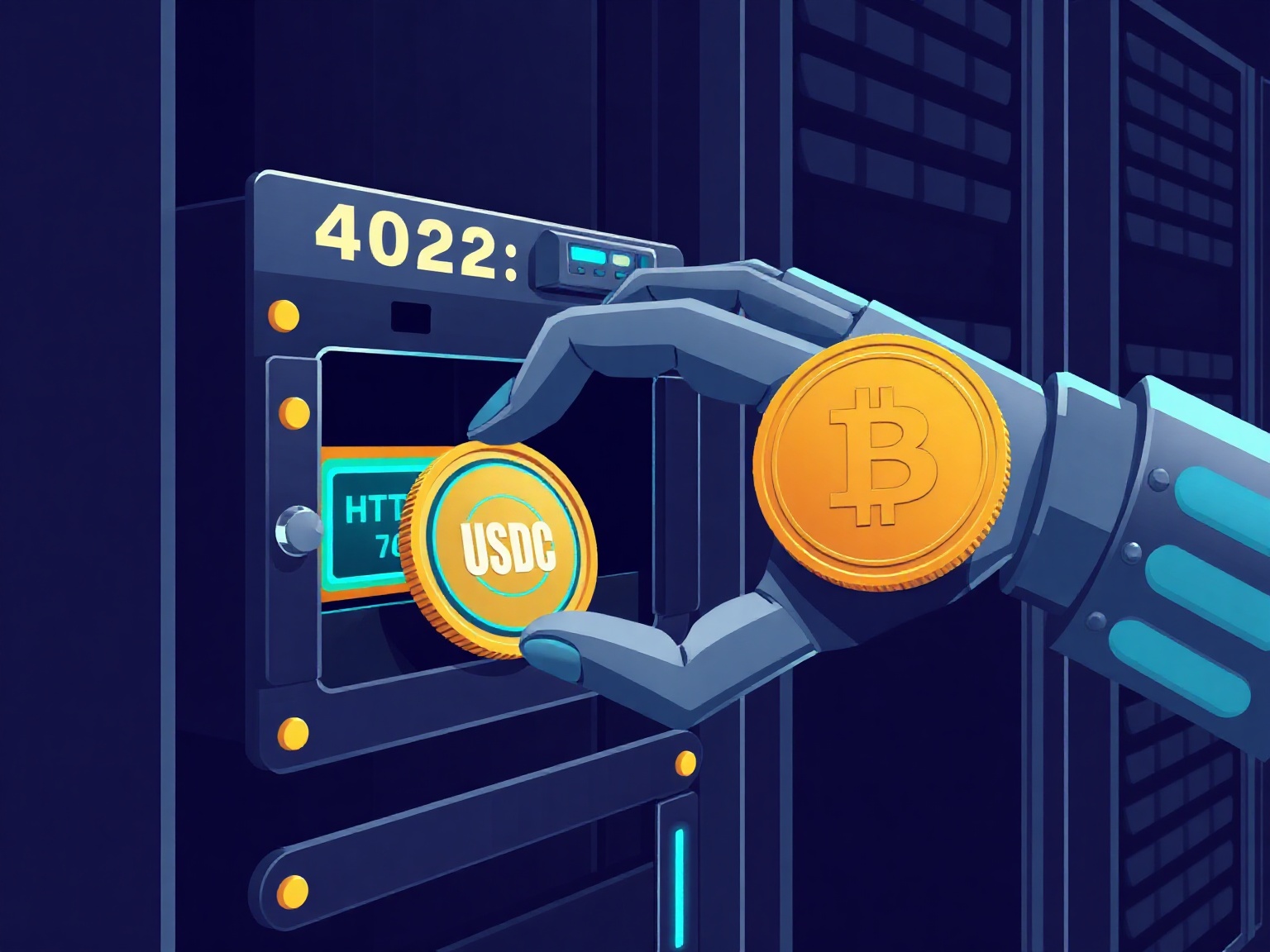
On July 30, 2026, NEAR Protocol launched a staking-based payment system for NEAR AI that lets users pay for inference and hosted agents by locking NEAR tokens instead of reaching for a credit card crypto.news. Staked tokens convert into monthly compute credits redeemable across all 43 models on the platform — including Anthropic, OpenAI, and Google models — with no cloud billing account, stored payment credentials, or card required crypto.news. The tokens themselves are never consumed: the credit allowance scales with stake size, and the capital returns to the wallet on unstake crypto.news. NEAR bills the launch as one of the first production systems paying for confidential inference and always-on agents through on-chain staking crypto.news.
The mechanism: recoverable prepayment
The design inverts the subscription model. Instead of spending fiat or stablecoins per billing cycle, a user stakes NEAR before touching the API, and the locked amount determines how many monthly compute credits they receive crypto.news. Larger stakes generate more compute points, so usage scales without switching payment models; users can add stake for one-time credits, reduce it when usage drops, or withdraw completely by unstaking crypto.news.
NEAR frames the token as a recoverable payment instrument rather than a consumable expense: “staking NEAR equates to AI usage, prepaid in a form you can recover,” with payment, staking, and unstaking all remaining onchain for the full lifecycle crypto.news. Every model on NEAR AI is available through the same mechanism, so developers can switch between providers without re-plumbing how inference is paid for crypto.news. The security pitch matters too: confidential inference and hosted agents can run without handing payment information to third-party platforms crypto.news.
// Conceptual stake-to-pay lifecycle on NEAR AI — the published SDK surface
// is not yet documented, this is the flow the announcement describes.

const stake = await nearStake(account, { amount: "1,000 NEAR" });
const budget = stake.monthlyCredits; // scales with stake size

// Any of the 43 models, same payment path:
await inference.call("anthropic/claude-sonnet", { debit: budget });
await inference.call("openai/gpt-5", { debit: budget });

// One month of always-on agents later, capital is recoverable:
await nearUnstake(stake); // tokens return to the wallet
Why this matters: agents can’t use credit cards
This launch is a direct answer to the agentic-payments problem. Agents are the first economic actors that need machine-native payment rails — they have no wallet in a pocket, no card on file, no human to approve a charge. The leading alternative, x402, standardizes the HTTP 402 Payment Required flow: an agent hits a paid endpoint, the server responds with payment terms, the agent settles in USDC, and retries the request x402.org. The protocol reached an operational milestone on July 14, 2026, when the Linux Foundation announced the launch of the x402 Foundation to standardize internet-native payments for agents, with the protocol contributed by Coinbase linuxfoundation.org.
But x402-style settlement still assumes a funded wallet — an agent spends from a USDC balance that a human must replenish. NEAR’s staking model removes the spendable balance entirely: the agent draws against a metered credit budget backed by locked collateral that the operator recovers later crypto.news. That is a meaningful architectural difference for always-on workloads:
x402 (per-request):    agent -> HTTP request -> 402 + payment terms
                       -> pay USDC from wallet -> retry request
stake-to-pay:          stake NEAR -> monthly credit meter
                       -> inference calls debit meter -> unstake to recover
For an agent fleet running 24/7, the stake-to-pay shape has two production advantages: the budget is bounded by construction (the meter, not the wallet, caps spend), and the capital is not consumed — the operator’s downside is opportunity cost, not cash burn. The trade-off is lockup: unlike x402’s instant settlement, the staked NEAR is committed for the duration of use crypto.news.
Token economics: staking gets a third job
NEAR argues the mechanism changes what the token is — the assets securing the network become the assets paying for machine-generated work, so the same token secures the chain and meters AI compute simultaneously crypto.news. Because the locked assets leave circulation while supporting AI workloads, repeated usage across developers and applications could commit more supply to active computing instead of speculative trading crypto.news. The announcement stopped short of estimating how much supply could eventually be locked and offered no adoption forecasts crypto.news.
The launch extends a staking expansion that has been building for over a year. In February 2025, Nomura-backed Laser Digital launched the Laser Digital NEAR Adoption Fund, an institutional staking product built on TruStake that combined AI and digital-asset exposure with staking income [Crypto.News — NEAR Protocol gets institutional boost with new Las…. On October 30, 2025, NEAR activated a network upgrade that cut annual token inflation from about 5% to roughly 2.4% and lowered expected staking yields from around 9% to approximately 4.5% [Crypto.News — NEAR Protocol halves inflation rate despite failing…. Stake-to-pay adds a third role for the token — validator security, institutional yield, and now metered AI consumption crypto.news.
Production considerations for practitioners
The mechanism is new, and the open questions are the interesting ones:
- The credit conversion rate is undisclosed. How many compute credits a given stake yields is the real pricing surface, and NEAR has not published the schedule. Practitioners should model stake-to-credit conversion as a variable until it hardens.
- Lockup is the cost. Staking for AI means capital is committed rather than spent. With expected staking yields now around 4.5% post-upgrade, the opportunity cost of locked NEAR is a real line s, that’s the difference between a deployable system and a compliance problem.
The bottom line
NEAR’s stake-to-pay model is the first mainstream production deployment of collateralized AI metering, and the pattern is worth stealing regardless of chain: convert idle token utility into a metered, recoverable inference budget. The agent-payments landscape is now visibly converging on two shapes — per-request settlement via x402-style micropayments, and collateralized metering via staking x402.orglinuxfoundation.org. Builders should treat them as complementary: x402 for open-internet endpoints where instant settlement matters, stake-to-pay for always-on fleets where a bounded, recoverable budget is worth a lockup. NEAR just shipped the production reference implementation of the second.
Sources
crypto.news, July 30, 2026
linuxfoundation.org, July 14, 2026
[Crypto.News — NEAR Protocol gets institutional boost with new Las…, February 2025
[Crypto.News — NEAR Protocol halves inflation rate despite failing…, October 2025
References
crypto.news crypto.news x402.org x402.org linuxfoundation.org linuxfoundation.org
← Back to all posts