The paper behind agent money: what x402 actually standardizes
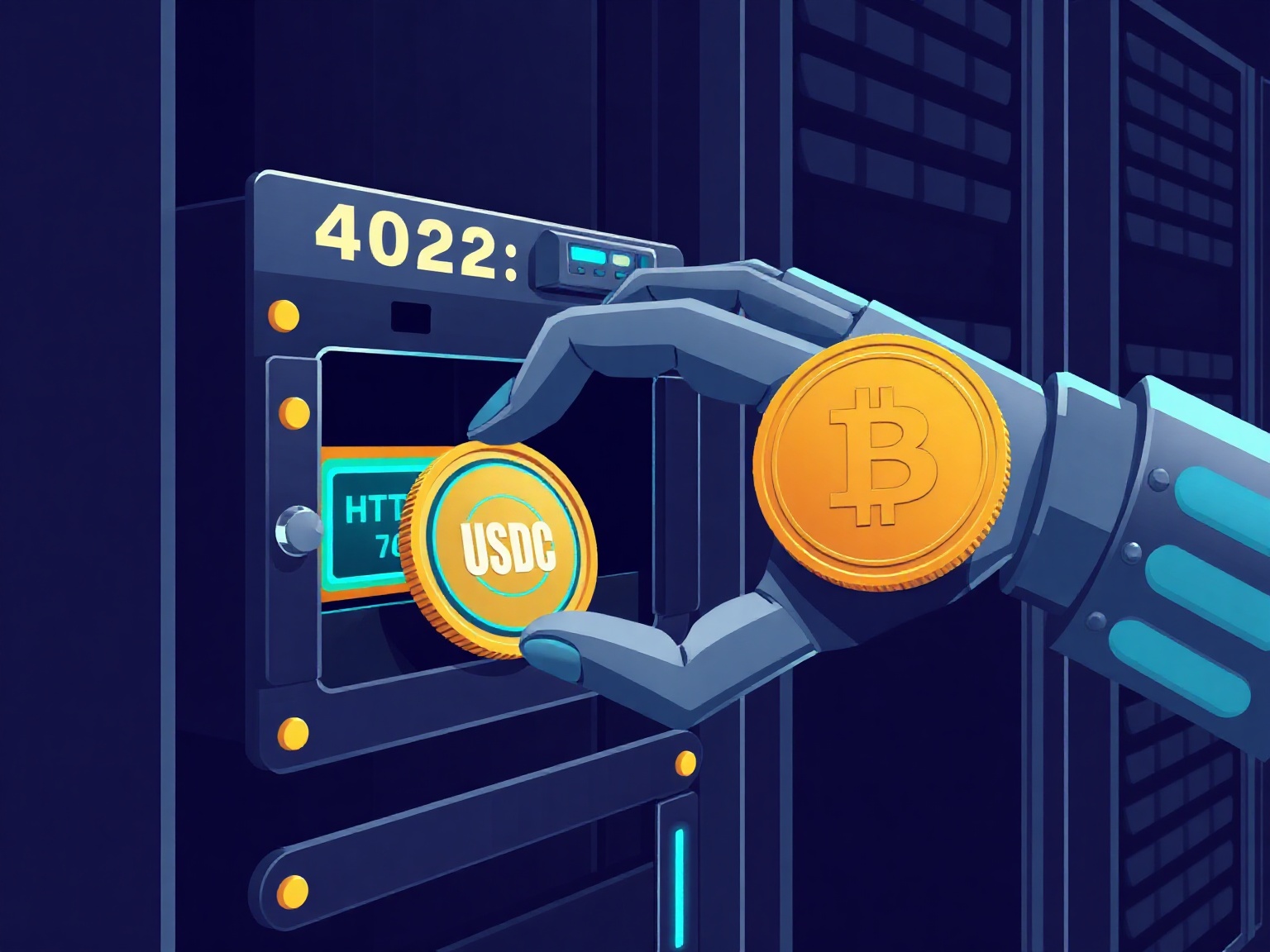
x402 is an open payment standard that launched via Coinbase on May 6, 2025, reviving the HTTP 402 “Payment Required” status code to enable stablecoin micropayments directly over the web. The standard’s launch collaborators included major infrastructure players like AWS, Anthropic, Circle, and NEAR, signaling broad industry buy-in for pay-per-request agent economics.
At its core, x402 provides a universal protocol for paywalls and metering. As of mid-2026, the Coinbase Developer Platform reports that it has “processed more than 100 million x402 payments across Base and Solana,” demonstrating real-world scale and adoption for this new form of programmable money movement (Coinbase CDP). This protocol layer is fundamental to how AI agents now transact.
What the x402 whitepaper actually says
The June 2026 x402 whitepaper, “The Payment Protocol for Agentic Commerce,” lays out the technical blueprint for this new economic layer. Its central promise is radically simplified integration for developers. The paper claims that x402 enables pay-per-use monetization in “one line of code,” effectively eliminating the need for complex API key management and subscription billing systems (x402 Whitepaper).
This isn’t just theory. The whitepaper ships a full reference implementation, including Express.js and Next.js middleware for servers, along with client libraries for Node.js and browsers. This toolkit allows any API provider to start accepting x402 payments quickly, and it allows any agent with a wallet to start paying for resources on a per-use basis.
Cloudflare Wallets: the architecture that makes agent spending safe
Cloudflare Wallets, announced on August 4, 2026, provides the critical infrastructure layer that makes agent spending both possible and safe. The architecture introduces two distinct wallet types to separate human and machine financial agency (Cloudflare Blog).
- Account Wallets are human-owned and control overall spending.
- Virtual Wallets are agent-operated via API keys, with their spending capped and constrained by the owning Account Wallet.
This isn’t a generic crypto wallet; it’s a purpose-built system for delegated machine economics. As Cloudflare notes, it arrives at a time when “a majority of traffic on the web” is driven by bots, creating an urgent need for native agent financial infrastructure.
Allowance, allowlist, and max-tx caps — the three guardrails
Cloudflare Wallets’ safety model is built on three configurable guardrails that prevent runaway agent spending (Cloudflare Blog). First, an allowance sets a total spending limit for an agent over a period, such as a $50 monthly cap. Second, an allowlist restricts which endpoints or services an agent can pay, ensuring it only interacts with pre-approved vendors. Third, a max transaction size (max-tx) caps the amount for any single payment, like a $5 limit per API call. Together, these create a sandboxed financial environment for agents.
cloudflare.pay: giving agents an identity
The system provides more than just spending controls; it gives agents a verifiable identity. Through cloudflare.pay, agents receive optional, human-readable delegate identities (e.g., research.example.cloudflare.pay) that act as a stable handle for the wallet, letting merchants recognize which agent — and which organization — is behind each request. This identity layer is crucial for accountability and allows services to know which specific agent is making a request for AI inference, data, or content.
Monetization Gateway: how sellers get paid
For sellers and API providers, Cloudflare launched the Monetization Gateway on July 1, 2026. This service allows any resource behind Cloudflare — a web page, a dataset, an API, or an MCP tool — to be put behind a paywall with sub-second settlement (Cloudflare Blog). Payments settle over x402 in stablecoins, and sellers can redeem accumulated stablecoins for fiat. The service launched with an early-access waitlist for Cloudflare customers.
Agent identity on-chain: ERC-8004 and the trust layer
On-chain identity and reputation are being formalized by standards like ERC-8004, “Trustless Agents,” a draft Ethereum standard with authors from MetaMask, the Ethereum Foundation, Google, and Coinbase (ERC-8004). This standard defines three key registries: Identity, Reputation, and Validation. Notably, it explicitly cites x402 payment patterns as a source of rich feedback signals that can feed into an agent’s reputation score, linking financial activity directly to on-chain trustworthiness.
MetaMask Agent Wallet vs Cloudflare Virtual Wallets
The market is seeing purpose-built wallets for agents, each with a different philosophy. The Cloudflare Virtual Wallet is a custodial, API-driven tool optimized for delegated spending within the Cloudflare ecosystem. In contrast, the MetaMask Agent Wallet, launched as GA on August 6, 2026, is a self-custodial solution giving users direct control over agent spending through spend limits and protocol allowlists (MetaMask). It adds advanced features like Guard Mode/Beast Mode, transaction simulation, Blockaid threat scanning, and MEV protection, and it does not require a native gas token.
| Feature | Cloudflare Virtual Wallet | MetaMask Agent Wallet |
|---|---|---|
| Ownership/Custody | Custodial (Cloudflare-managed) | Self-custodial (user-managed keys) |
| Operator | Agent via API key | User-defined agent |
| Spend Control | Allowance, allowlist, max-tx caps | User-defined spend limits & allowlists |
| Primary Identity | Human-readable .cloudflare.pay address | Standard Ethereum address |
x402 vs traditional API billing
The x402 model represents a fundamental shift from traditional API billing. Instead of pre-purchased subscription tiers or complex metered invoicing, x402 enables atomic, per-request payments settled instantly in stablecoins. This eliminates friction for both providers and consumers, especially machine consumers.
| Aspect | x402 Payments | Traditional API Billing |
|---|---|---|
| Onboarding | Instant, no contract or credit check | Typically requires account creation & billing setup |
| Billing Model | True pay-per-request / pay-per-use | Often subscription tiers or monthly metered invoicing |
| Settlement Currency | Stablecoins (USDC, etc.) | Fiat currency (USD, EUR) via bank transfers |
| Guardrails/Limits | Wallet-level allowance, allowlist, max-tx | Provider-side rate limits and quota caps |
| Integration | One line of code with reference middleware | Complex SDKs, API key management, invoicing systems |
How to integrate x402 in one line of code
Integrating x402 payments is designed to be straightforward for developers. Using the reference implementation from the x402 Foundation, you can add payment requirements to an existing Express.js or Next.js API route. The middleware intercepts the request, validates the attached x402 payment proof, and proceeds only if valid. For client-side integration, Node.js and browser libraries handle the wallet interaction and payment signing. Detailed integration guides are available in the Cloudflare Agents documentation.
FAQ
Short answers to the questions engineers ask first when evaluating x402 and Cloudflare Wallets: how the protocol works, what the wallet guardrails actually cap, whether sellers must hold crypto, and how the two agent-wallet custody models compare. Each answer links to its primary source.
What is x402 and how does it work? x402 is an open payment standard that uses the HTTP 402 status code to enable automatic stablecoin micropayments between clients (like AI agents) and servers. When an agent requests a paid resource, the server responds with 402, and the agent’s wallet pays the amount to continue (x402 Whitepaper).
Is x402 the same as crypto payments in general? No. x402 is a specific protocol designed for machine-to-machine commerce. It standardizes how payment requests are made and fulfilled over HTTP using stablecoins, focusing on automation, micropayments, and integration simplicity, unlike general crypto transfers (Coinbase Launch).
How does Cloudflare Wallets keep an AI agent from spending too much? Cloudflare Wallets enforces spending via three guardrails: a total allowance (e.g., $50/month), an allowlist of approved endpoints, and a maximum transaction size (e.g., $5 per call). These are set by the human owner of the Account Wallet and cannot be exceeded by the agent (Cloudflare Blog).
Do I need to hold crypto to accept x402 payments? Payments settle in stablecoins, but sellers do not have to run crypto infrastructure themselves: the Cloudflare Monetization Gateway handles payment verification and settlement at the edge, and sellers can redeem accumulated stablecoins for fiat in their bank account (Cloudflare Monetization Gateway).
How is MetaMask Agent Wallet different from a Cloudflare Virtual Wallet? The key difference is custody. MetaMask Agent Wallet is self-custodial, giving users direct control over their keys and agent permissions. Cloudflare Virtual Wallet is a custodial, API-based tool designed for simplicity and tight integration within the Cloudflare ecosystem (MetaMask).
Is x402 production-ready for API monetization? Yes. x402 is in production, having processed over 100 million payments on Base and Solana networks. Major platforms like Cloudflare have built production-grade monetization tools on top of the standard, indicating its readiness for commercial use (Coinbase CDP).
The bottom line
x402, Cloudflare Wallets, and the Monetization Gateway form the payment stack of the agentic era: a standard for pay-per-request value exchange, buyer-side spending controls, and seller-side settlement over stablecoins. For engineers building agents, this shifts the design center from API keys and subscriptions to wallets and allowances — direct, programmable commerce instead of clunky billing.
How this guide was built
This explainer is based on official documentation, launch announcements, and technical whitepapers published by Coinbase, Cloudflare, the x402 Foundation, and the Ethereum EIP repository. We did not run the tools hands-on. All factual claims are tied directly to the linked primary sources, which were verified as accessible on 2026-08-16.
For deeper dives into the agent payments landscape, see our PayBox and x402 explainer, read why agent tokens keep dying while payment rails grow, or browse our full agentic payments coverage on NiteAgent. You can also test models in our AI model arena.
← Back to all posts