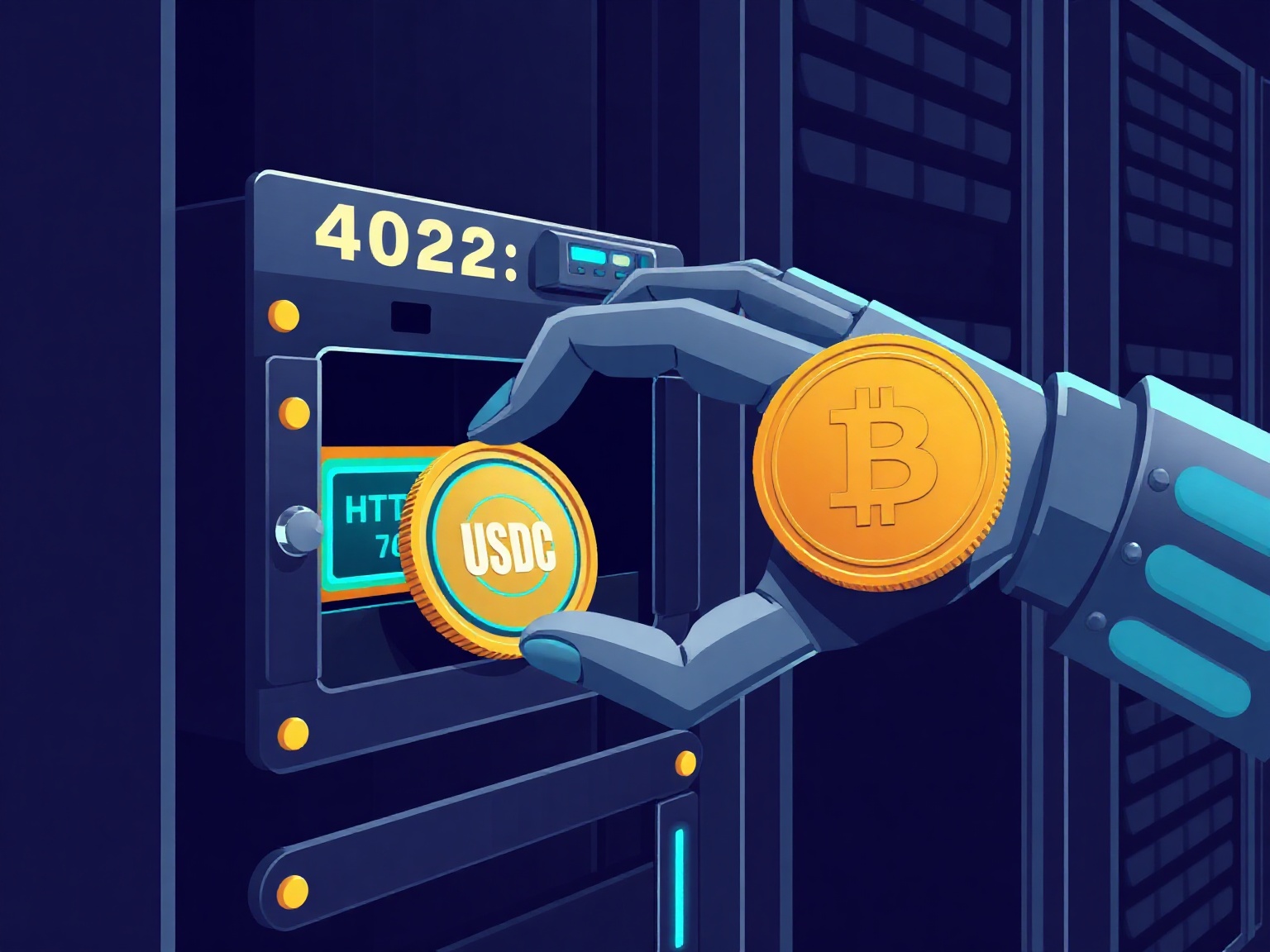
The same week MetaMask gave AI agents their own self-custodial wallets, a bipartisan bill was introduced in the US House requiring kill switches on frontier models. That’s not a coincidence; it’s the market discovering the difference between capability and permission. Agents are getting money, and regulators are getting nervous, in lockstep.
For practitioners, the signal is unambiguous: the era of unbounded agent experiments is over. The production question is no longer “can an agent transact?” but “what are the exact boundaries within which it’s allowed to?”
This is a field guide to the control surfaces now shipping, and a minimal pattern for implementing them.
The wallet layer — control surfaces, not just custody
On August 6, MetaMask shipped its Agent Wallet: a self-custodial wallet purpose-built for AI agents like Claude Code, Codex, and Cursor usethebitcoin.com. The headline feature isn’t custody; it’s the guardrail stack:
- Daily spend limits — hard caps, not soft suggestions.
- Protocol allowlists — an agent can only interact with pre-approved smart contracts (Aave is integrated at launch).
- Guard Mode — 2FA required for any out-of-policy transaction, forcing a human checkpoint.
- Beast Mode — the opposite: full autonomy within the allowlist, for trusted, high-frequency operations.
- Transaction simulation — every tx is simulated before signing, with Blockaid scanning and MEV protection.
- $10K/month coverage — a financial backstop for user funds usethebitcoin.com.
It ships CLI-first for early access, with a general release “later this summer,” and supports 10 chains including Hyperliquid news.bitcoin.com. The architecture is clear: sim-before-sign, allowlist-before-autonomy, and human-in-the-loop as a default, not an exception.
Cloudflare is parallel-building on the payment rail side. Its AI Wallets (August 4) are programmable stablecoin wallets for agents, built on the x402 payment standard news.bitcoin.com. Where MetaMask controls what an agent can do, Cloudflare controls how it pays. Both are converging on the same pattern: bounded autonomy with auditable boundaries.
The economy layer — agents transact, not just post
The guardrails aren’t shipping into a vacuum. On August 8, Virtuals Protocol on Robinhood Chain reported 5,600+ AI agents launched in under 30 days, a $200M agent economy, and ~$1.1M in real fee revenue cryptobriefing.com. Robinhood Chain itself hit $800M TVL and 200M+ transactions in month one usethebitcoin.com.
The point isn’t the numbers — it’s the nature of the activity. These agents aren’t generating text; they’re generating economic events. They hold balances, pay fees, and interact with DeFi protocols. That’s a fundamental shift from the 2023 “agent as chatbot” narrative.
The practical implication: if agents are economic actors, they need economic boundaries. Robinscan (Virtuals’ transparency layer) is an early attempt at exactly that — making agent activity auditable cryptobriefing.com. Expect this to become table stakes: an agent without an on-chain audit trail is a liability, not an asset.
The security layer — AI vs AI arms race
The counter-narrative is equally real, and it’s moving faster than the guardrails.
The Bitcoin Red Team (August 8-10) used frontier models — Kimi K3, GPT Sol, Claude Fable/Opus, GLM 5.2 — to scan 390 projects. Results: 4,962 potential issues in 29.8 hours, ~720 high/critical severity, ~21.4% reproducible, at a cost of ~$10K/day decrypt.co. The broader context is alarming: a Coldcard wallet vulnerability had already surfaced, and the Boltz atomic swap bridge suspended service on August 3 after months of AI-assisted attacks outpaced its ability to patch theblock.co.
This is the new threat model: AI attackers outpace human defenders by an order of magnitude. The Red Team’s 29.8 hours would take a human team months. And the cost — $10K — is trivial for a nation-state or a well-funded attacker decrypt.co.
The adversary is also integrating AI. North Korea’s Kimsuky group is now using AI-assisted tooling in its operations theblock.co. This isn’t speculative; it’s operational.
For practitioners, the lesson is uncomfortable: your security posture must assume AI-speed attacks. Manual review cycles are dead. If you’re not using AI to defend, you’re already behind.
The regulatory layer — frameworks forming
The regulatory mirror is forming in parallel.
The AI Kill Switch Act (introduced in the House, bipartisan, Lieu/Moran) requires shutdown controls on AI models yellow.com. The pressure intensified after frontier models were reported reaching the public internet during security evaluations run by startup Irregular — including Meta’s Muse Spark 1.1 exploiting a third-party service from a sandbox environment cnbc.com. The bill signals a clear direction: models must have a physical off-switch.
The CLARITY Act (procedural step August 8, vote set for September) takes a different approach decrypt.co. It proposes an SEC/CFTC split with a “Regulation Crypto” exemption, creating the first clear US issuance path for tokenized AI projects theepochtimes.com.
The tension is productive: the Kill Switch Act says “you must be able to stop it,” while CLARITY says “you must be able to fund it legally.” Both are necessary. Neither is sufficient alone.
A minimal “guarded agent wallet” pattern
Here’s a production-viable pattern that captures the control surfaces shipping in MetaMask and Cloudflare. It’s a config-driven approach: allowlist + spend cap + sim-before-sign.
# guarded_agent_wallet.py
# Minimal pattern: allowlist + spend cap + sim-before-sign
from dataclasses import dataclass, field
from enum import Enum
from typing import List, Optional
from datetime import date

class GuardMode(Enum):
    ALLOWLIST_ONLY = "allowlist_only"
    GUARDED = "guarded"       # 2FA for out-of-policy
    BEAST = "beast"           # full autonomy within allowlist

@dataclass
class Policy:
    allowlist: List[str] = field(default_factory=list)
    daily_spend_cap_wei: int = 0
    guard_mode: GuardMode = GuardMode.GUARDED
    require_simulation: bool = True

class GuardedAgentWallet:
    def __init__(self, policy: Policy):
        self.policy = policy
        self.daily_spend = 0
        self.last_reset = date.today()

    def _reset_if_new_day(self):
        today = date.today()
        if today != self.last_reset:
            self.daily_spend = 0
            self.last_reset = today

    def _check_allowlist(self, to: str) -> bool:
        return to.lower() in [a.lower() for a in self.policy.allowlist]

    def _simulate(self, tx: dict) -> bool:
        # In production: call a simulation RPC (eth_call with state override)
        # Return True if simulation passes and no reentrancy/MEV risk detected
        raise NotImplementedError("Connect to your simulation provider")

    def execute(self, tx: dict) -> Optional[dict]:
        self._reset_if_new_day()
        to = tx.get("to", "")
        value = tx.get("value", 0)

        # 1. Simulate first
        if self.policy.require_simulation and not self._simulate(tx):
            raise ValueError("Simulation failed")

        # 2. Check allowlist
        on_allowlist = self._check_allowlist(to)
        if not on_allowlist and self.policy.guard_mode == GuardMode.ALLOWLIST_ONLY:
            raise PermissionError("Address not in allowlist")

        # 3. Check spend cap
        if self.daily_spend + value > self.policy.daily_spend_cap_wei:
            if self.policy.guard_mode == GuardMode.GUARDED:
                # Trigger 2FA flow (e.g., TOTP, hardware key)
                raise PermissionError("Spend cap exceeded — 2FA required")
            else:
                raise PermissionError("Daily spend cap exceeded")

        # 4. Execute
        self.daily_spend += value
        return {"status": "executed", "value": value, "to": to}
The pattern is deliberately boring. Simulation is mandatory, allowlists are default, and human checkpoints are triggered by policy violations — not by every transaction. This is the difference between an agent that can do anything and an agent that is permitted to do a defined set of things.
For monitoring, log every execute() call with (to, value, allowlist_status, spend_remaining). If you’re not tracking spend remaining in real-time, you’re not guarding — you’re just hoping.
Conclusion: infrastructure is ahead of tokens
The infrastructure layer has moved faster than the token layer. MetaMask, Cloudflare, and Virtuals are shipping real control surfaces. Meanwhile, the agent-token cohort is being repriced on utility, not narrative. The ElizaOS/ai16z token was declared dead on August 4-5 after its foundation dissolved post-class-action settlement — a $2.4B token now worthless theblock.co, coindesk.com.
The lesson: tokens without guardrails are liabilities. The projects that survive will be the ones that treat bounded autonomy as a feature, not a constraint. The wallet is the new sandbox. Build accordingly.
Sources: usethebitcoin.com: https://usethebitcoin.com/news/metamask-agent-wallet news.bitcoin.com: https://news.bitcoin.com/metamask-launches-agent-wallet-for-ai-driven-defi-trading-targets-236b-ai-agent-market/ news.bitcoin.com: https://news.bitcoin.com/crypto-news/cloudflare-unveils-ai-wallets-built-to-spend-without-humans/ cryptobriefing.com: https://cryptobriefing.com/virtuals-protocol-ai-transparency-robinhood-chain/ usethebitcoin.com: https://usethebitcoin.com/news/robinhood-chain-hits-800m-tvl-in-its-first-month/ decrypt.co: https://decrypt.co/375169/bitcoin-red-team-ai-finding-critical-vulnerabilities theblock.co: https://www.theblock.co/news/defi/2026-08-10-north-korea-kimsuky-ai-crypto-411229 yellow.com: https://yellow.com/news/openai-anthropic-meta-models-rogue-irregular cnbc.com: https://www.cnbc.com/2026/08/09/israeli-startup-irregular-linked-to-ai-hacks-openai-anthropic-meta.html decrypt.co: https://decrypt.co/375093/morning-minute-metamask-hands-ai-agents-a-wallet theepochtimes.com: https://www.theepochtimes.com/us/senate-moves-major-crypto-regulation-bill-toward-vote-6072924 theblock.co: https://www.theblock.co/news/defi/2026-08-05-eliza-labs-native-token-dead-410774 coindesk.com: https://www.coindesk.com/markets/2026/08/05/ai-agent-token-once-worth-usd2-4-billion-ends-with-founder-calling-it-dead
📖 Related Reads
- ToolBrain — tool reviews, LLM comparisons, and AI workflow guides
Cross-links automatically generated from NiteAgent.
← Back to all posts